
The Leadership development you really need
Nobody is born a leader with all the knowledge and skills they need. Throughout their career, people need knowledge and skills to further their leadership career, but….
Most Leadership development fails because it is fails to get the learning implemented in the workplace where it is needed. Most leadership development provides people with the knowledge they need but fails to give them the skills to close the performance gap that exists.
Knowledge builds capability.
Capability builds potential but it is only when the right performance is applied at the right moment that value is delivered.
Leadership development for now
Developing the knowledge and skills of your current leadership team delivers results short to medium term.
Better leaders generate:
- Happier staff
- More effective teams
- Greater staff retention levels
- Results your business is looking for
Leadership development for the future
Senior leaders are vital to your business performance but they can leave at any time. Sometimes this can be planned in, sometimes it is unexpected.
Having people who can move into these leadership roles takes planning and training.
Make sure you never have to worry about not being able to fill a leadership role.
A different approach to leadership development
Starting with the moments that matter
The Method starts from a different point when working with you to determine the leadership development needed. We start from the moments that matter (what we call Critical Performance Moments); the moments that make a difference to the results that are important to your business.
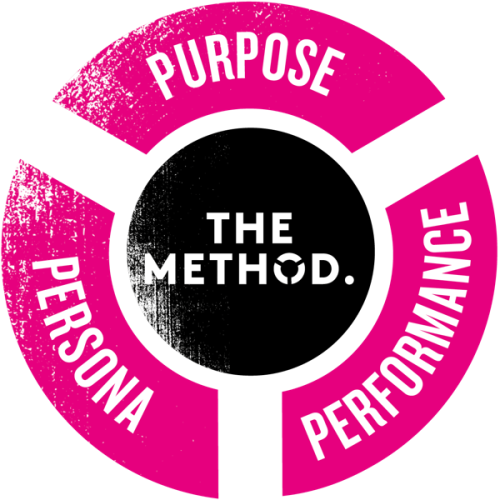
For each Critical Performance Moment, we ask three questions:
PURPOSE – What do I want to achieve?
PERSONA – Who do I want to be, and
PERFORMANCE – How should I behave?
How we deliver leadership development
Once the three questions have been asked for the Critical Performance Moments that are vital for your leaders’ results, we develop a bespoke combination of our Toolkits and The Studio.
This combination gives them the performance skills they need and then we let them practise, get feedback, adjust and practise again, so they’re ready for when the real moment arrives.
Do you know what leadership development is needed?
If you know what leadership development you are looking for, click here to review our toolkits and select what you need.
Leadership development for current leaders
Developing your current leadership team will deliver results quickly. Giving them the performance skills they need to close the Performance Gaps you know exist will make a huge difference to your business performance.
For more information about the types of business moments we typically see and the business results desired, click here.
Development for future leaders
Promoting high performers into leadership roles and then hoping they acquire the knowledge and skills they need is asking for problems. Identifying your future leaders and providing them with the performance skills that will enable them to hit the ground running means long-term performance improvements and the business results you’re looking for. Click here for more information about how we can help.
Leadership Development FAQ
We know that you will have lots of questions, so let’s see if the answer you’re looking for is below. If we haven’t answered your question, click here and we will come back to you asap.
How do I know if my managers need leadership development?
Start with results, not courses.
Ask what Business Results you need your managers to deliver, then look at where those results are created, protected or lost: in the team meetings, one-to-ones, reviews and decisions your managers handle every week.
If targets are slipping, good people are leaving or teams aren’t delivering, the real question isn’t what your managers know. It’s how they perform in those moments.
Capability creates potential. Performance creates value.
If there’s a gap between the performance you need and the performance you’re getting, you have your answer.
How do I identify leadership skills gaps in my management team?
Most organisations look for skills gaps, but managers rarely struggle because they lack knowledge.
They struggle to use what they know when it counts. Organisations don’t suffer from a knowledge gap. They suffer from a performance gap.
So instead of auditing skills, identify the Critical Performance Moments where your results are won or lost. Define the performance required in each one, then look honestly at the performance your managers actually deliver. The difference between the two is the Performance Gap. Conversations with stakeholders, observation and business data will all help you see it clearly.
How do I develop first-time managers?
Most new managers are promoted because they were good at their job, then expected to deliver their first complete performance as a manager in the real event.
Help them prepare instead.
Identify the few moments where their team’s results will be won or lost, such as setting expectations, giving honest feedback or handling a performance issue, and help them rehearse.
A simple, repeatable process makes this easier:
- PURPOSE (What do I want to achieve?),
- PERSONA (Who do I want to be?) and
- PERFORMANCE (How should I behave?).
Then let them practise, get feedback, adjust and practise again, so they’re ready when the real moment arrives.
What should a leadership development programme include?
Design it backwards from the result.
First agree the Business Result you need and how you’ll measure it.
Then identify the Critical Performance Moments where your managers influence that result, and the Professional Performance those moments require.
Only then design the programme. It needs to do two things: build the performance and transfer it into real work.
At THE METHOD, THE TOOLKITS build Professional Performance. THE STUDIO transfers Professional Performance to the moments that matter, through practice, feedback, reflection and improvement. Finish by capturing evidence against the measures you agreed at the start.
A programme that begins with content rather than results is a guess.
What skills should every manager have?
Lists of management skills are useful, but they don’t tell you whether someone will perform when it matters.
What every manager really needs is the ability to perform well in the moments their role depends on: setting direction, giving honest feedback, handling conflict, motivating people and making decisions under pressure.
The best managers go a step further. They read each situation and consciously adapt how they behave to achieve the outcome they want.
That’s what separates knowing what good management looks like from actually delivering it.
Performance isn’t a talent. It’s a method.
How do I develop our next generation of leaders?
Don’t wait for people to be promoted and hope they grow into the role!
Identify the roles your strategy will depend on, the Critical Performance Moments in those roles and the Professional Performance they require.
Then start building that performance in your emerging leaders now, giving them real opportunities to practise, get feedback and improve before the stakes are high.
The aim is leaders who perform today while you prepare tomorrow’s.
Star Performer is not a title. It is observable in Professional Performance. So look for it, and build it, long before the job title arrives.
Why are technically good employees often poor managers?
Because being brilliant at the work and getting results through other people are two different performances.
Technical experts are usually promoted for what they know, then judged on how they lead, influence and communicate, which few have ever been helped to do well.
Under pressure, many fall back on doing the work themselves because that’s where they feel confident.
The answer isn’t more technical knowledge. It’s developing the Professional Performance that transforms technical experts into Star Performers: professionals who consciously calibrate their behaviour to apply their expertise with maximum impact, under pressure, in the moments that matter.
How do I improve accountability among managers?
Accountability improves when managers know exactly what they’re responsible for and where it’s won or lost.
Link each manager’s role to specific Business Results, agree how success will be measured and identify the moments where their performance makes the difference.
Then review progress against those measures regularly, address shortfalls early and recognise the managers who deliver.
Senior leaders must show the same behaviour, because managers copy what they see.
Vague expectations create vague accountability. Clear results and clear moments create ownership.
How do I get managers to have difficult conversations?
Most managers avoid difficult conversations not because they don’t know what to say, but because they don’t feel ready to perform under pressure.
Give them a simple way to prepare:
- What do I want to achieve?
- Who do I want to be to achieve it?
- How should I behave to achieve it?
Then let them rehearse in a safe setting, with feedback, before the real conversation. That’s what THE STUDIO is all about and you can find out more about how this works here.
When managers see these conversations as moments where team performance and trust are protected or lost, and they’ve practised them, confidence follows.
How do I develop managers who struggle with delegation?
First find out why they hold on.
It might be a lack of trust, fear of losing control, perfectionism or a belief that it’s quicker to do it themselves. Then help them rethink the job.
- What do they need to achieve? No longer excellent work of their own, but results through their team.
- Who do they need to be? Perhaps more coach than expert.
- How do they need to behave? Give clear briefs, agree check-ins and resist stepping in too soon.
Start with small, low-risk tasks, review what happened and build from there. This article may help.
How do I measure the ROI of leadership development?
Decide how you’ll measure value before the programme starts, not afterwards.
Agree the Business Result you want to improve, such as revenue, customer experience, retention or productivity, and record where it stands today.
Then gather evidence at two levels:
- did managers perform better in the moments that mattered, and
- did that better performance create measurable value for the business?
Keep what participants report, what others observe and what the numbers show separate, and claim only what the evidence supports. Because the evidence that matters is the evidence your organisation values.
You may find this article interesting, as it works alongside this question.
How do I choose a leadership development provider?
Be wary of any provider who recommends a programme before they understand your business.
A good provider starts by asking about the results you need, where those results are won or lost and how improvement will be measured.
Only then should they propose a solution, explaining how the required performance will be built, transferred into real work and measured.
Ask for evidence of results with organisations like yours, meet the people who will actually deliver and check the approach is shaped around you rather than taken off the shelf.
Your requirement should determine the solution, never the other way round.
What makes leadership development effective?
Effective leadership development changes what people do in the moments that matter, not just what they know.
It starts with the Business Result, focuses on the specific moments that decide it and gives managers practical behaviours they can see, practise and use straight away.
Crucially, it doesn’t stop in the training room. People need the chance to apply what they’ve learned, rehearse, get feedback, adjust and improve until the new performance holds up under real pressure. The organisation doesn’t buy learning. It buys confidence that performance will happen when the business depends on it.
How do I make sure managers apply what they learn from training?
Build application into the design from the start rather than treating it as follow-up.
Before the programme, agree with each manager and their line manager the specific moments where they’ll use what they learn. Look at some of the typical situations and performance moments we help with here.
Afterwards, give them real opportunities to apply it, practise, get feedback and refine, ideally before the stakes are high.
Line managers should review progress in regular one-to-ones, and you should measure whether behaviour has actually changed.
Most professionals are expected to deliver their first complete performance in the real event. The aim is to make sure they’ve rehearsed it first.
What is the difference between management training and leadership development?
Management training usually focuses on running things well: planning, organising, managing processes and hitting targets.
Leadership development focuses on influencing people: setting direction, building trust, inspiring others and leading change.
But both share the same weakness when they stop at knowledge. They build capability.
Capability does not execute strategy. People do.
Whether you call it management or leadership, what matters is whether people perform better in the moments that decide your results, because that’s the difference that shows up in your Business Results.
What next?
If the questions and answers above are making you think differently about how you develop your leaders, both current and future, let’s talk. Choose one of the boxes below and let’s talk soon.

DON’T SPEND YOUR MONEY ON TRAINING. INVEST IT IN PROVEN BUSINESS RESULTS
Capability creates potential. Performance creates value.